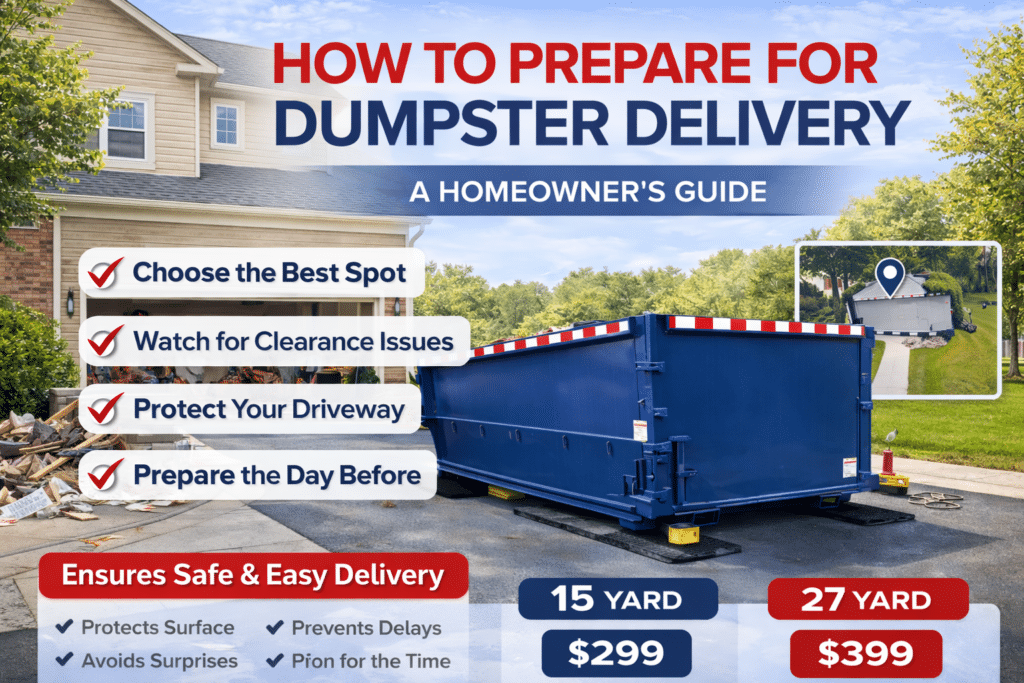
Ordering a dumpster is one of the easiest ways to handle a home cleanout, renovation, or remodeling project. But to avoid delays, surface damage, or safety issues, it’s important to prepare properly before your dumpster arrives.
This guide explains how to prepare for dumpster delivery, so your rental goes smoothly from drop-off to pick up.
The most important step when preparing for dumpster delivery is choosing the right spot.
We recommend placing dumpsters on:
- Concrete driveways
- Gravel parking areas
- Firm, hard surfaces close to the work area
We do not recommend placing dumpsters on grass or dirt. Weather changes can soften the ground, and once loaded, dumpsters become very heavy. This can cause:
- Ruts
- Sinking
- Ground damage
Also remember:
- Dumpster doors open about 7.5 feet wide
- The area must be clear of parked vehicles
- There must be room to open the rear door if walk-in loading is needed
- We Use Your Address to Plan Delivery
Once we have your address, we often review it using satellite maps. This helps us:
- Recommend the best placement
- Identify tight streets or driveways
- Spot overhead hazards
This planning helps avoid surprises and allows for a safer delivery.
- Protect Your Driveway or Surface
Surface protection is not always required, but it is a smart upgrade — especially for:
- New concrete
- Pavers or brick
- Asphalt driveways
Metal dumpsters placed directly on concrete can scrape or leave marks. While most marks are temporary, protection helps reduce risk.
We use purpose-built polyurethane protection boards placed under:
- Dumpster wheels
- Frame rails
These boards:
- Resist water, oil, and rust
- Prevent metal-to-surface contact
- Help protect decorative and newer driveways
- Watch for Clearance and Access Issues
Our trucks are very maneuverable and can place dumpsters in tight or awkward locations — even inside garages or shops when needed.
However, customers should tell us about:
- Low power lines
- Tree branches
- Narrow streets
- Tight turns
- Steep driveways
- Gates or fences
Notifying us ahead of time helps us choose the safest delivery position.
- What to Do the Day Before Dumpster Delivery
The day before delivery:
- Move vehicles from the placement area
- Mark the agreed-upon spot
- Unlock gates or clear access
If possible, be present when your dumpster arrives. This allows us to:
- Answer questions
- Review prohibited items
- Show you the maximum fill line
Staying below this line is required for safe transport.
The most common problem items are:
- Full-size tires
- Paint
These items cannot go to standard landfills. In some cases, special disposal can be arranged — but only if we know ahead of time.
Landfill rules and safety regulations must be followed at all times.
- Choose the Right Dumpster Size
Many customers ask for the smallest dumpster to save money. However, this often leads to overfilling and extra trips.
Typical guidelines:
- Small garage cleanouts → 15-yard dumpster
- Furniture, multiple rooms, or whole-house cleanouts → 22-yard or 27-yard dumpster
Large items like couches and mattresses take up more space than expected. Choosing the right size upfront saves time and money.
- A Common Real-World Problem
A common situation we see:
A customer orders a small dumpster for a garage cleanout, then adds large furniture. The dumpster fills faster than expected and is loaded above the top rail.
For safety and DOT compliance, overloaded dumpsters cannot be transported. This means:
- Items must be removed
- A second dumpster may be needed
- Or the customer must self-haul items
This is why we ask detailed questions when you place an order.
- We Recommend Sizes Based on Experience
When we suggest a dumpster size, it’s not about upselling. It’s based on real experience.
Our goal is to provide the right tool so:
- Your project stays on schedule
- The dumpster can be hauled legally
- You avoid unloading debris
We want you to succeed with the dumpster you order.
Final Tip: Ask Before Delivery
If you’re unsure about placement, materials, or size, ask before delivery. A few minutes of planning can prevent major problems later.
Preparing properly ensures:
✔ Safe delivery
✔ Easier loading
✔ Faster pickup
✔ No surprises